
Photos: Courtesy by Primosic
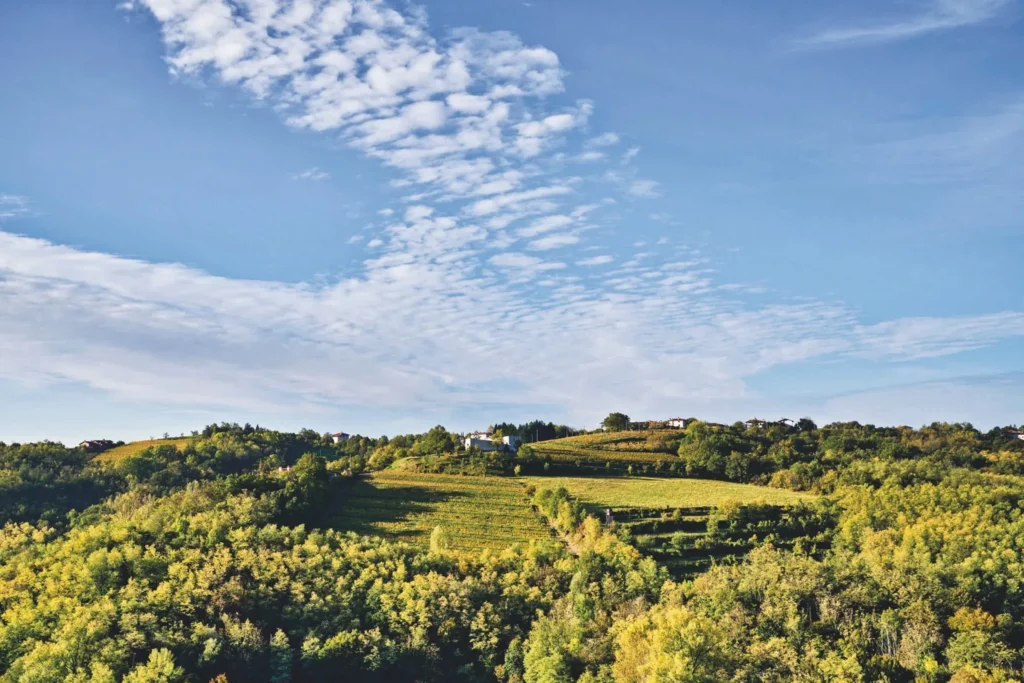
In Oslavia, among the hills of the Collio in Friuli, Ribolla Gialla remains on the vine when the rest of the region has already finished harvesting. October moves slowly here. The colour of the skins shifts from green to gold, almost amber, as though time had chosen to pause on these slopes before moving on. The Primosic family has spent generations learning to respect that wait. They do not shorten it or force it. They turn it into identity.
Between the Judrio and Isonzo rivers, close to the borders with Slovenia and Austria, the Primosic vineyard occupies a territory unlike any other in northern Italy. The proximity of three cultures — Italian, Slavic and Austro-Hungarian — permeates the soil, the landscape and, inevitably, the wine. Here, wine is not manufactured. It is inherited, interpreted and passed on.
A wine that existed before it had a name
Long before orange wine entered the international vocabulary as a fashionable category, white grapes were already being fermented with their skins in the hills of Gorizia. It was not a manifesto or a market decision. It was simply the way wine had been made in Oslavia since the 16th century, when the County of Gorizia formed part of the Austro-Hungarian Empire and these hills supplied the tables of Vienna with wine, olive oil and fruit from the “garden of Mitteleuropa”.
Primosic did not invent a trend. It recovered a memory. And that distinction changes everything. While many wineries adopted skin contact as a contemporary gesture, in Oslavia the method has a land registry, a surname and an address. The family is documented as owning vineyards in the Teresian cadastre of 1751. By the late 19th century, Karlo Primosic was already sending bulk wine to Vienna via the Transalpina railway. After the First World War, Josef Primosic rebuilt the house and replanted the vineyards with the quiet gesture of those who understand land as a generational commitment.
In 1964, Silvian Primosic — one of the first members of the Consorzio Collio — bottled the entire production of the estate for the first time. In 1967, the historic Numero 1 was born, a Tocai Friulano with DOC Collio that consolidated the international recognition of the house. Decades later, the brothers Marko and Boris would deepen the work with old vines and, from the late 1990s onwards, with macerated wines shaped by an increasingly precise and defined approach.
“Per noi il vino è una cultura che è proprio nelle nostre radici.” Nicola Primosic, quinta generación
Structure from the skin
Ribolla Gialla is the grape that expresses everything Primosic wants to say. Native to Friuli, with thick skins, marked acidity and great versatility, it is a variety that resists simplification. Nicola explains it with the precision of someone who has grown up listening to conversations about it. “Acidità e mineralità” — acidity and minerality — are the two essential concepts. Then he adds the line that clarifies everything. “Tutta la struttura è nella buccia.” All the structure is in the skin.
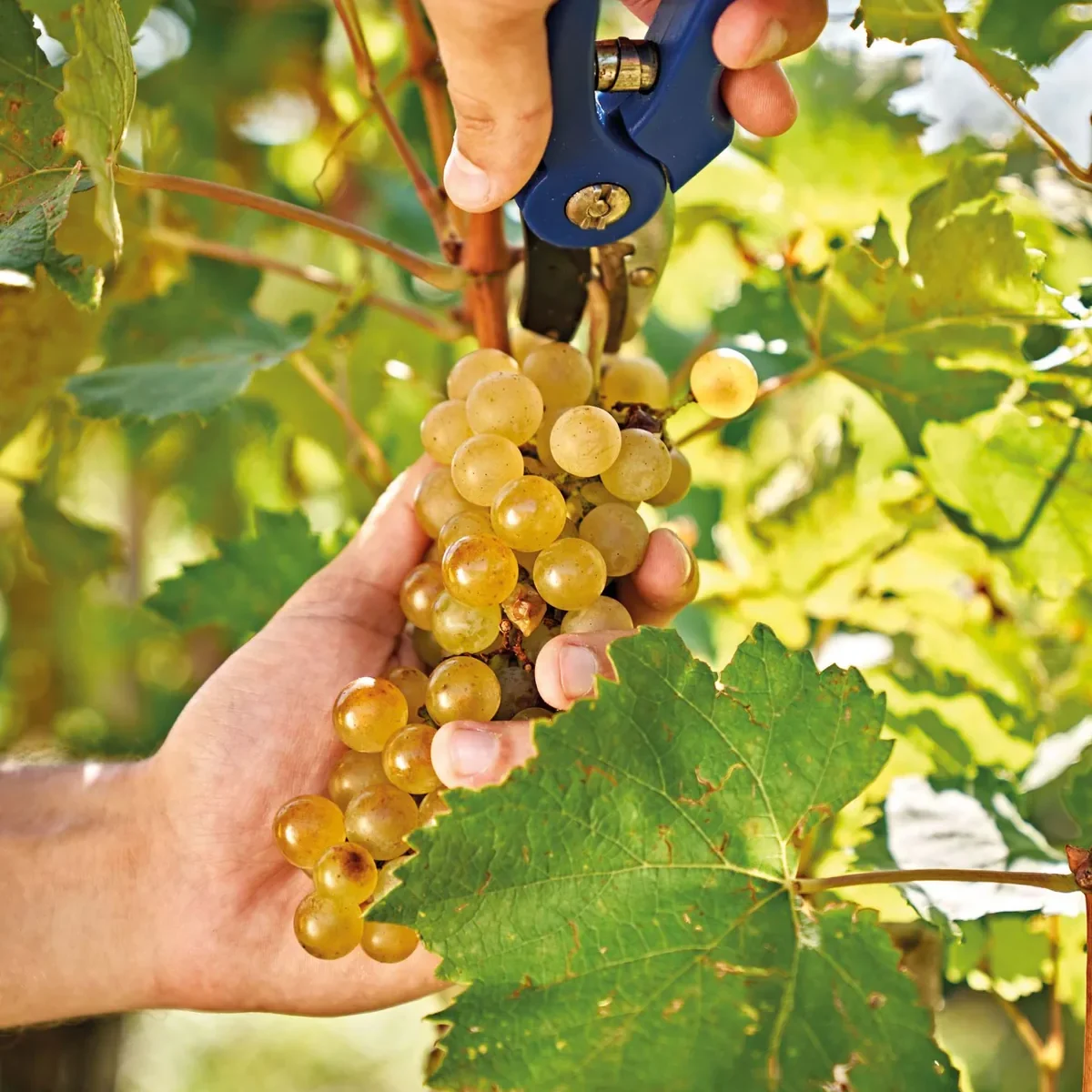
The harvest begins when the bunches reach that precise golden tone that only time can produce. “Quando vediamo che l’uva ha quel colore dorato, è il momento di vendemmiare,” Nicola explains. There is a first selection on the vine itself, leaving the best bunches for a light appassimento that concentrates the aromas before fermentation. The wine is born from observation, judgement and patience — three qualities that cannot be bought.
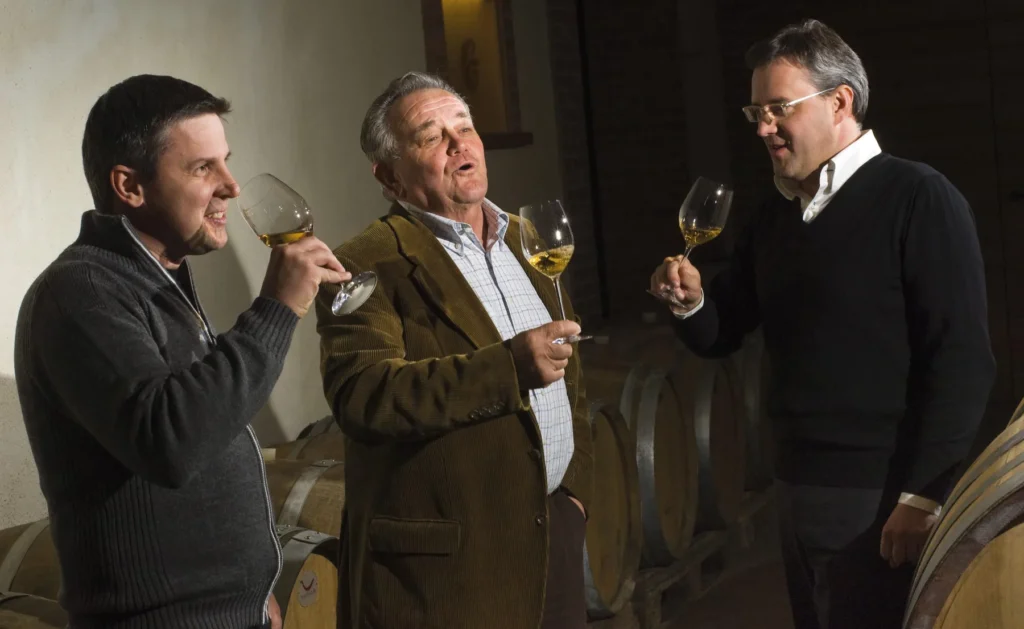
When the grape remains in contact with its skins for weeks, the wine gains chromatic depth and a tannic dimension that completely expands its presence on the palate. It is not the light white wine often associated with the Collio during the decades of the Italian boom. It is something else. More complex, longer, more demanding of the person who serves it and of the person who drinks it.
The Skin collection
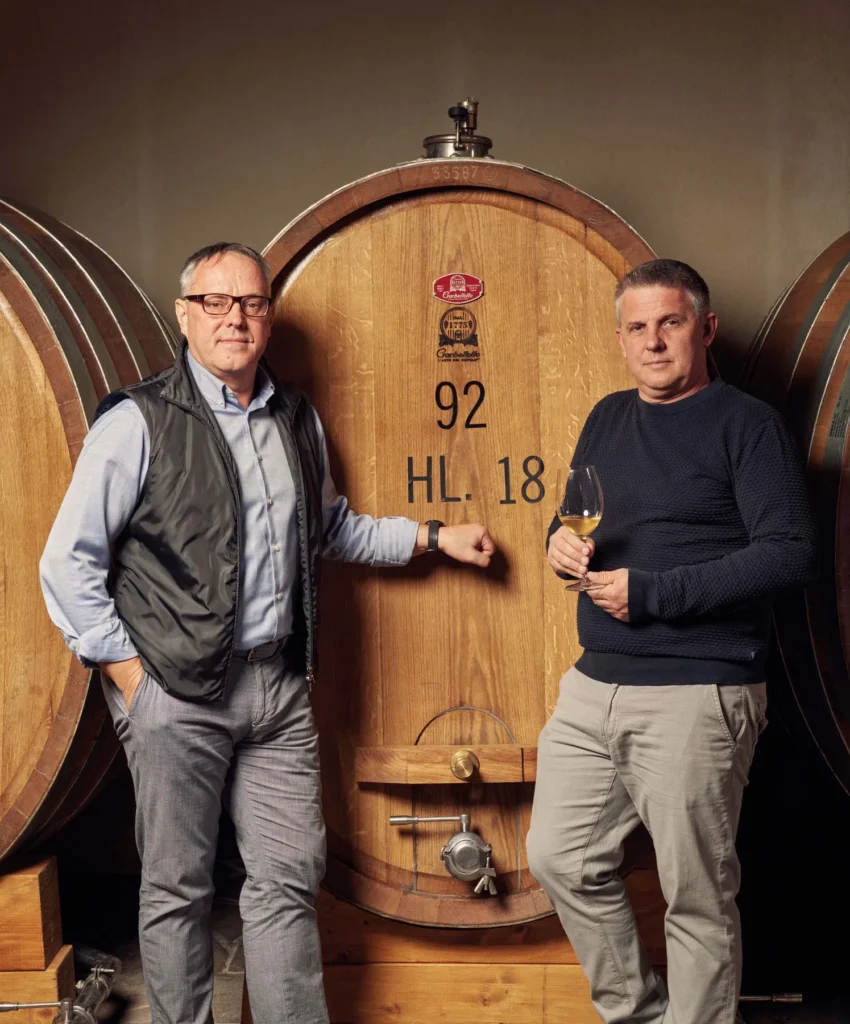
The Skin collection brings together Primosic’s three orange wines under one philosophy. Maceration as language, never as effect. Each wine expresses a different variety, yet all share the silky, mineral structure that sets Oslavia apart in the world of natural wine.
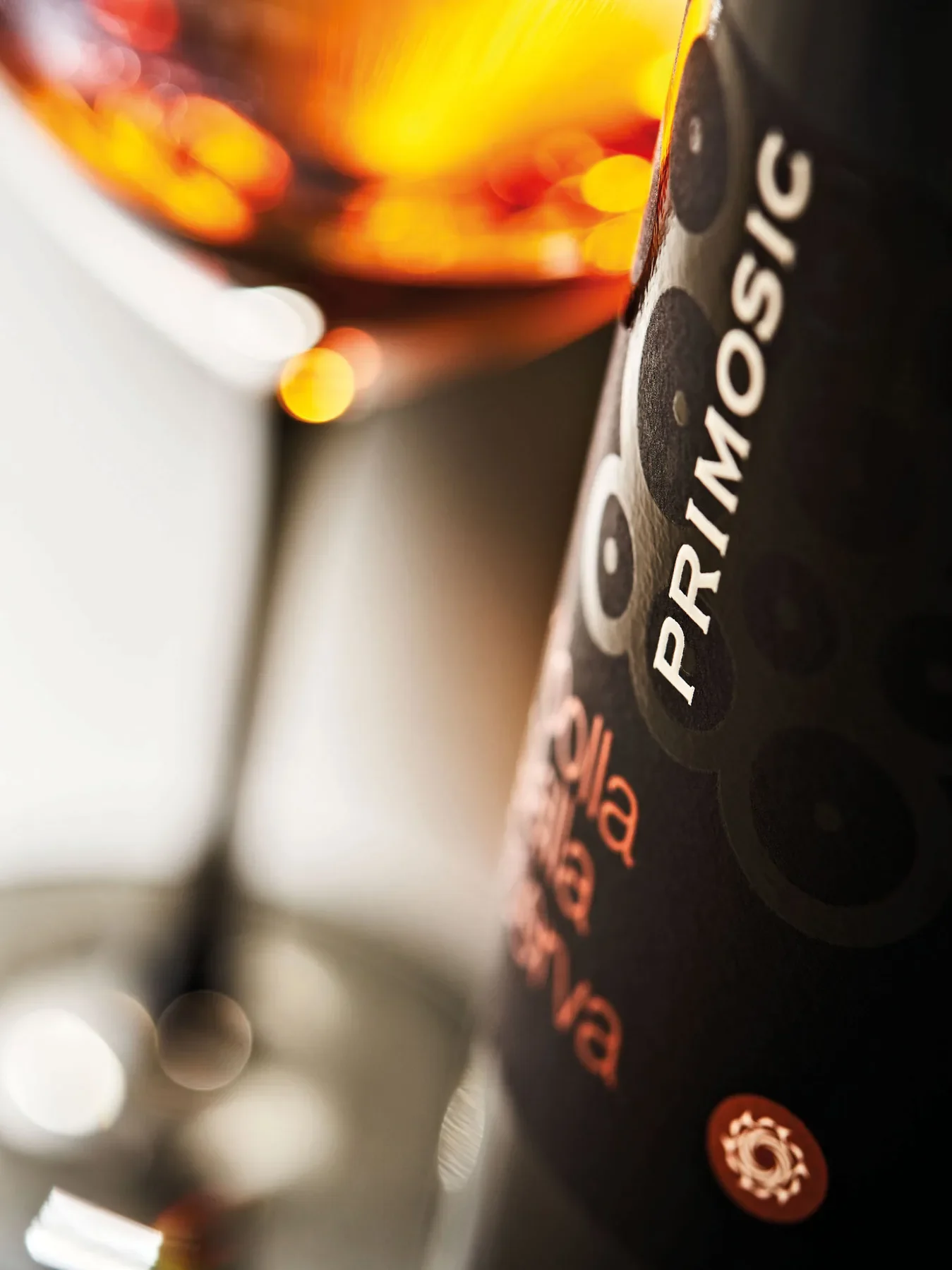
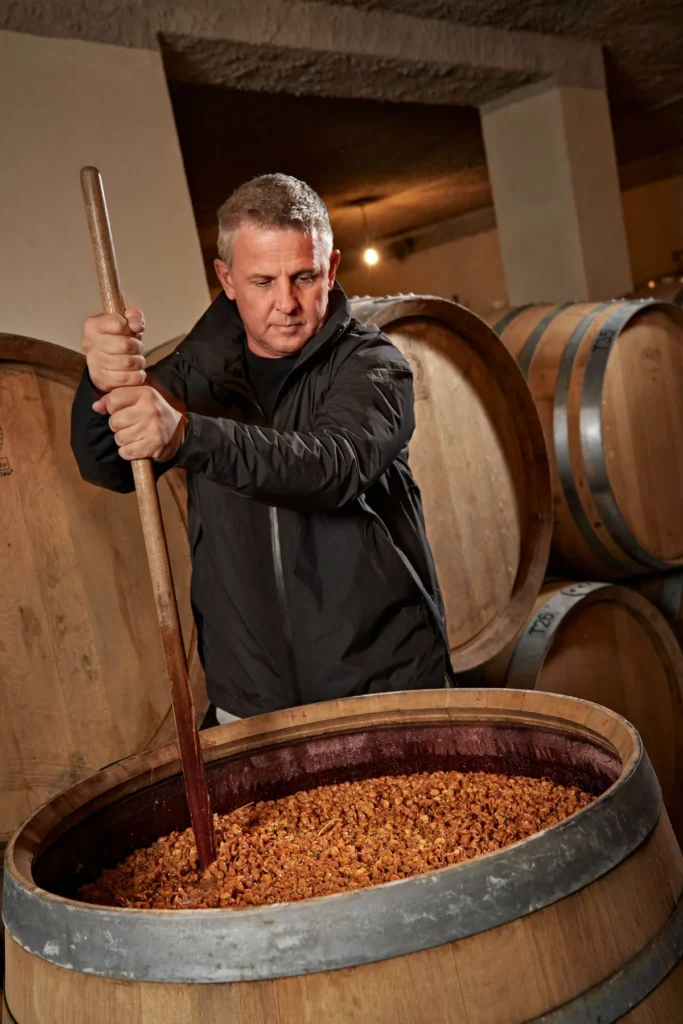
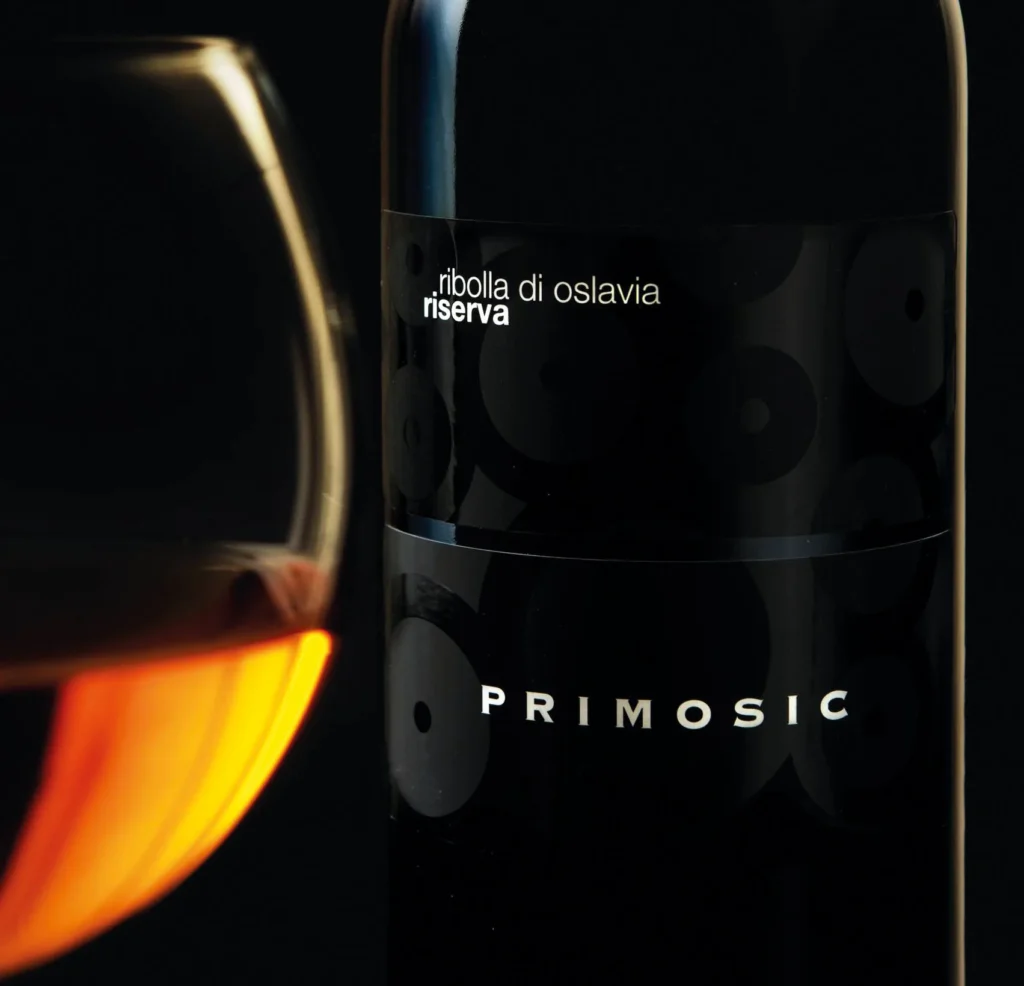
Ribolla Gialla Riserva is the estate’s most complete expression. Spontaneous fermentation, around four weeks of maceration in open wooden vats, two years of ageing in Slavonian oak and further refinement in bottle. In the glass, notes of apricot, green tea, bitter orange peel and toasted nuts appear, held by a minerality that lingers on the palate long after the last sip. It pairs naturally with anything from sesame and miso-crusted salmon to spiced lamb or small game. It is one of those wines that redefine what a white wine can do at the table.
Friulano is intense golden orange, with the bitter almond nuance that makes it singular among northern Italian macerated wines. Minerality is present from the first sip, with a tension that reminds us we are facing a variety deeply tied to its territory. It has a natural affinity with long-aged cheeses, seasoned white meats, a well-executed carbonara or any preparation in which fat and acidity need to meet.
Pinot Grigio is the most surprising of the three for anyone arriving with prejudices about the variety. Copper-toned and floral, with red fruit on the nose and an enveloping structure on the palate, it has nothing to do with the industrial Pinot Grigio that dominates mediocre wine lists. It works extraordinarily well with grilled octopus, Asian cuisine with smoky depth, intense fish soups or a classic amatriciana.
When wine left the vineyard with Think Yellow
In 2005, Primosic and Porsche Italia developed Tiro Rapido together, a cultural project under the slogan Think Yellow. The golden yellow of Ribolla Gialla connected with Porsche’s chromatic identity through a journey across Italian squares and literary cafés, strengthening the international recognition of the variety. Design, speed and wine culture coexisted in the same universe without any of the three elements feeling forced.
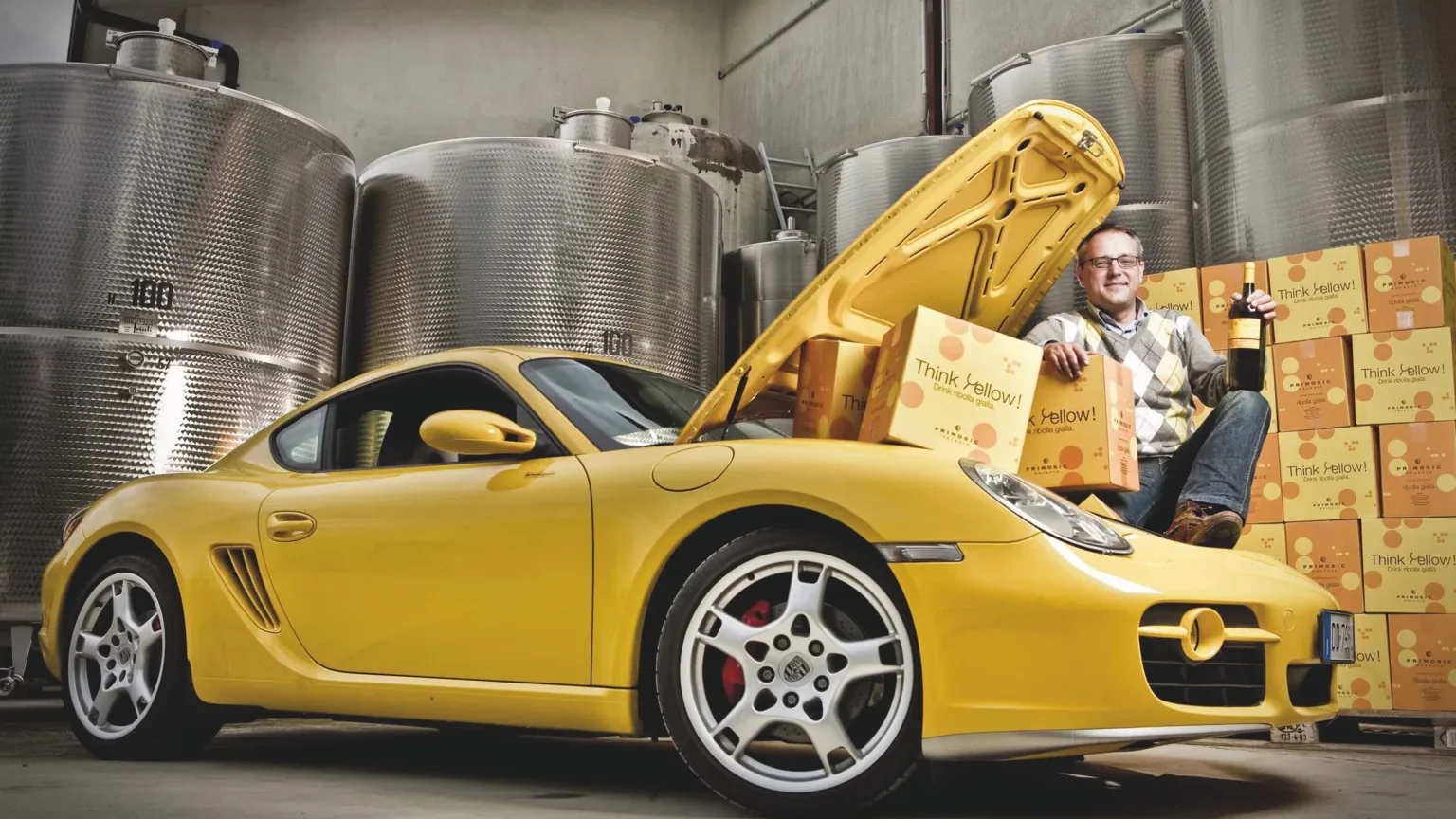
This is not an anecdotal detail. It is an indication of how Primosic understands its place in the world. As producers of a wine that deserves to circulate beyond the strictly oenological sphere, with something to say in conversations about elegance, territory and authenticity.
Roots and responsibility
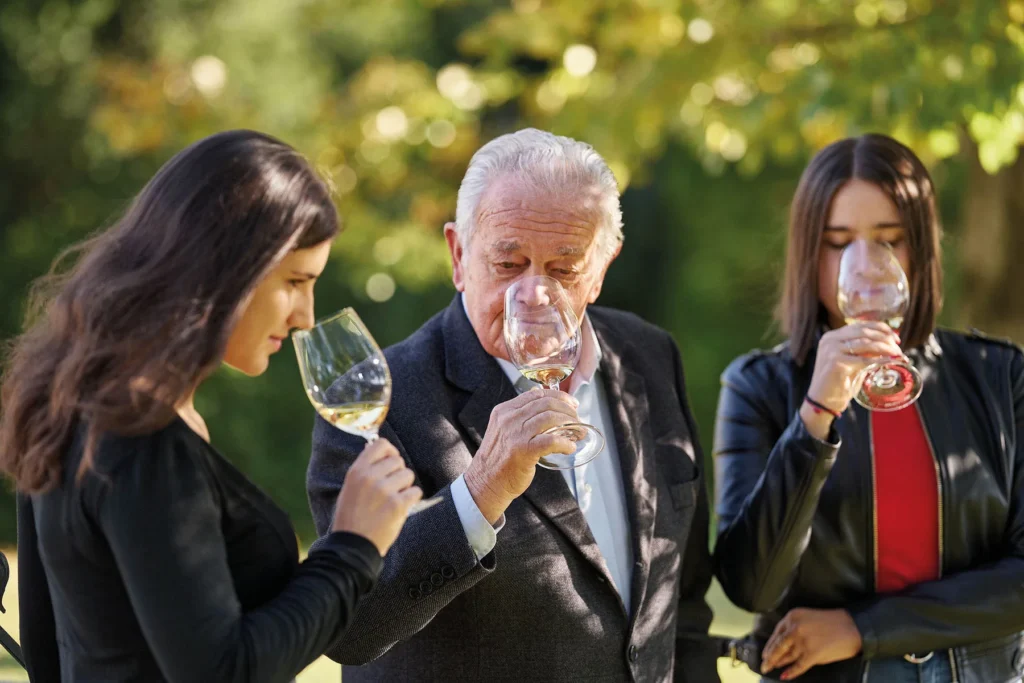
Younger generations, Nicola notes, are showing growing interest in these wines precisely because of what they represent — territorial identity, biodiversity and connection to origin. In an accelerated, globalised world, authenticity has become one of the most difficult luxuries to manufacture and one of the easiest to recognise.
Primosic holds S.Q.N.P.I. certification — Sistema Nazionale di Qualità di Produzione Integrata — and works with agricultural practices that respect the ecosystem of a territory which, as Nicola points out, belongs first to those who inhabit it, long before any consumer arrives.
In the vineyard, native varieties — Ribolla Gialla, Friulano, Malvasia Istriana and Refosco dal Peduncolo Rosso — grow alongside Pinot Grigio, Sauvignon Blanc, Chardonnay, Merlot and Cabernet Franc. All are cultivated using the Guyot method, with 5,000 plants per hectare, maintaining the density that quality demands. Sustainability here is not a marketing argument. It is the natural consequence of working the same land once worked by a grandfather and a great-grandfather.
The Oslavia Wine Experience
An hour and a half from Venice by train and half an hour from Trieste, Oslavia occupies a geographical position with a discreet kind of privilege. Close enough to everything to arrive with ease, far enough from the usual circuit for the visit to retain its character.
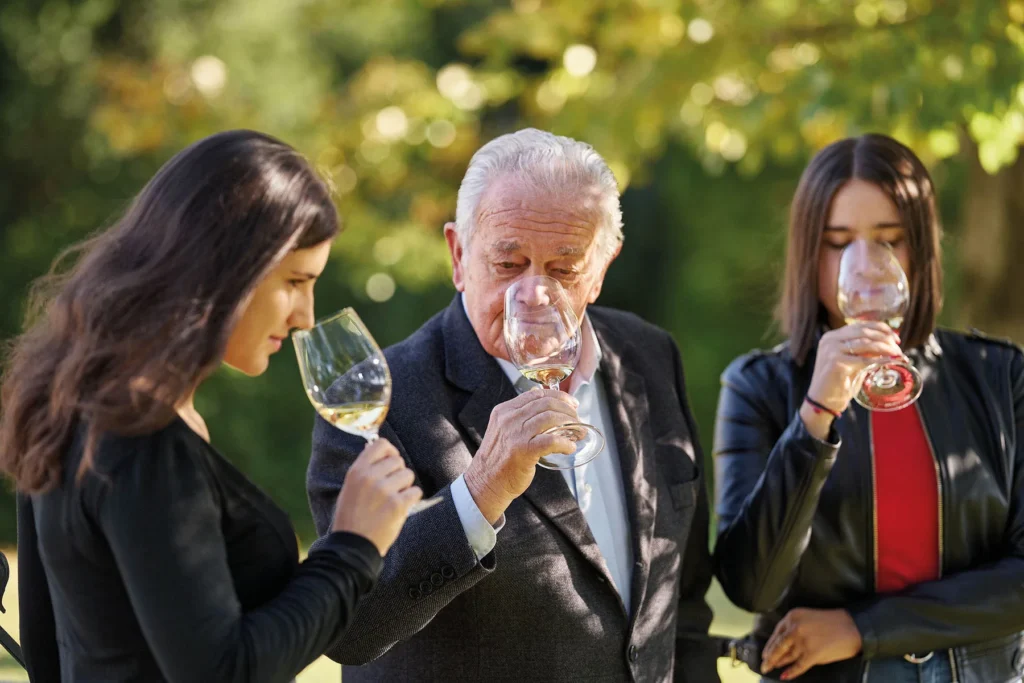
The family lives on the property. Silvan Primosic, master winemaker and historic figure of the house, preserves a spirit of hospitality that defines the character of every visit. “Siamo sempre disponibili e aperti per le visite in cantina,” Nicola says with a naturalness that completely changes the tone of wine tourism. There is no corporate protocol or guided tour with headphones. There is a real winery, a family present and a wine that is better understood when tasted while looking at the vineyard from which it was born.
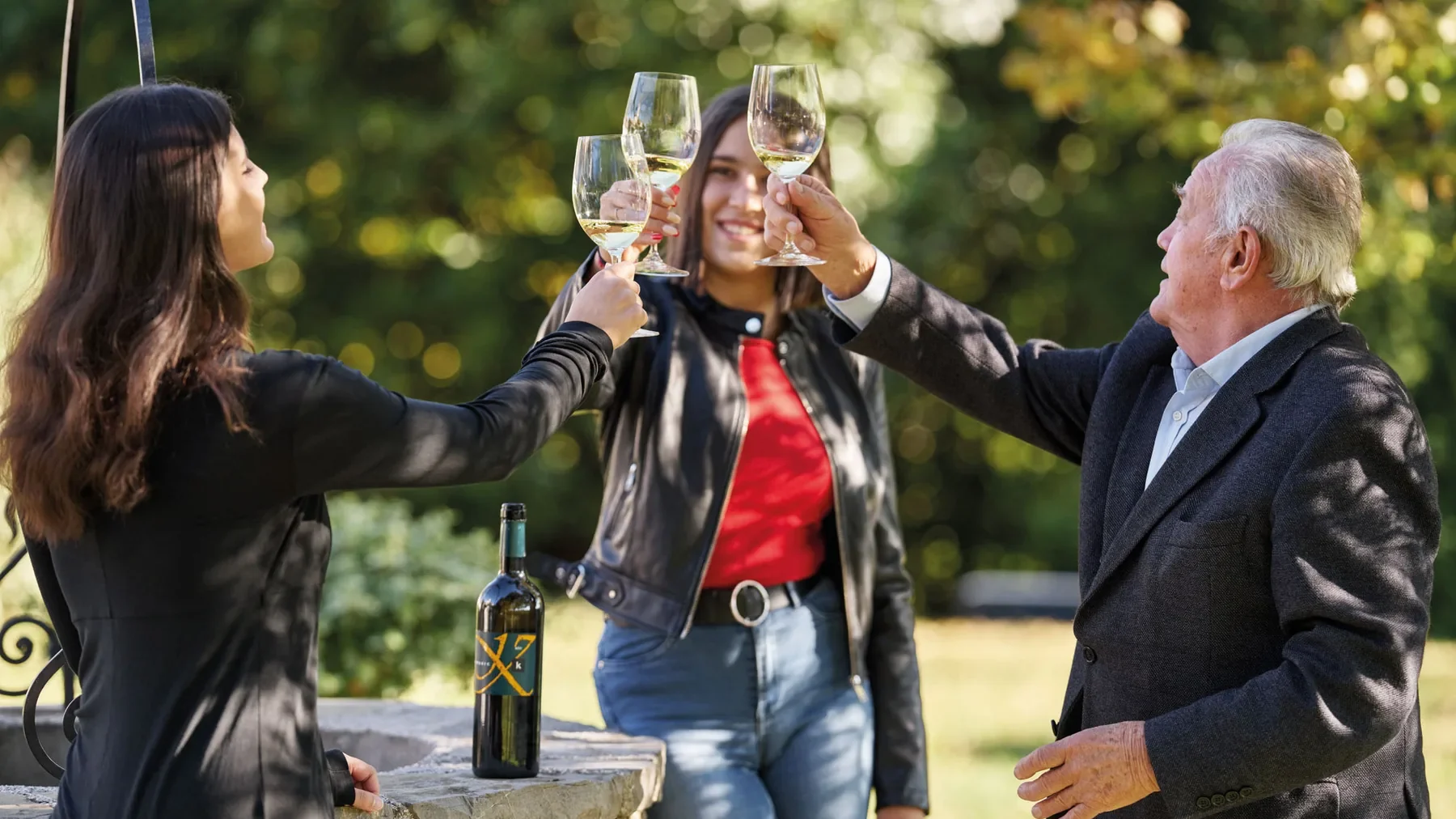
The Oslavia Wine Experience is one of those encounters that returns wine to its most honest dimension — the table, the landscape, shared time and the conversation that emerges when the host knows every vine in the vineyard by name.
“Il vino non è solo bere vino, ma è assaggiare vino.” Nicola Primosic
In Oslavia, macerated Ribolla Gialla seduces because it expresses roots, landscape and an elegance built through patience. And because, in the hands of a family such as Primosic, orange wine ceases to be a fashionable category and becomes something far more valuable — an argument for why some places produce wines that cannot be imitated anywhere else.